

Coin collection record-keeping means writing down all facts about your coins, becoming a needed part of the work for anyone gathering coins.
Keeping a good record is needed for three main things, all helping to make the collection safe and easy to work with.
Knowing what you own, allowing you to see at once which coins are missing and which coins you already have, helps you not buy the same coin two times.
This clear view of the collection saves you money and time.
Knowing the price, recording purchase costs, and the time of buying, helps you see how much the whole collection is worth.
This knowledge is needed for getting insurance or for selling the collection at some time in the future, giving you a full money picture, for example, in the coin scanner app.
Being safe, having a full list with pictures, helping the police find the coins, or helping you get money from the insurance company if the coins are stolen or lost.

Main Facts About Each Coin
Every coin must be fully described by some needed points; all these facts have to be written down for each coin in your collection, creating a full record.
- Country and place of making, showing where the coin was made, marking its home.
- Year made, telling the exact year written on the coin, defines its age.
- Face value, being the coin’s price, shows its money’s worth in its time.
- Metal, showing which metal the coin is made of, and telling its material worth.
- Grade, showing how well the coin is kept. The state is usually written using a scale from 1 to 70 or by using letters, giving a quality score.
- Date of buying, telling the day you bought this coin, marking the moment it came to you.
- Price of buying, showing how much money you paid for the coin, and writing down the money you put into it.
- Keeping place, showing exactly where the coin lies in your album or safe, helps you find it fast.
- Notes, including any needed comments, and adding more facts to the record.
Ways to Keep Records
You can keep records in two main ways, each way having its good and bad points, making you choose the best fit for you.
Books and Cards
Cheap and simple to start, needing only a pen and paper, making it easy to begin.
Not needing power or the internet, allowing you to look at the notes at any time, giving full access.
Easy to lose, having all the facts vanish if the book or cards are lost, showing the need for care.
Hard to find and sort, needing you to read the whole book to find all copper coins, making the work slow.
Digital Record-Keeping
Allowing easy change and fixing of facts, not needing to write again, making records clean.
Allowing sorting by any point, helping you find all coins from the USA made before 1900 in one second, making finding things very fast.
Allowing you to make copies of the facts, letting you save the file in three different places, and helping you not to lose it.
Programs for Digital Record-Keeping
For digital records, collectors use two main kinds of programs, each type giving a different way to manage the collection.
Excel, Google Sheets
A table program works like a record book, but it is on the computer, letting you make your own columns and put in the facts.
- Giving full freedom, letting you choose which points you need and name them as you wish, and creating a custom plan.
- Allowing easy adding of photos, letting you put a link to the coin’s picture in the table, and giving a visual point.
- Good for looking at the facts, letting you quickly pick and find the facts you need, for example, giving fast views.
- Needing you to put in all the facts yourself, taking much time, especially for large collections, makes it a slow start.
Special Apps
These are programs made only for coin records, having ready-made fact lists and tools, making the work simpler.
- Having ready fields, already having all the needed points, not needing you to think of them, saves time.
- Giving help at once, knowing the number of coins made, their history, and example prices, giving needed facts.
- Letting you search the world over, showing which coins from different countries you have gathered, giving a world view.
- Having a good look, the app looks nice and clear, making record-keeping a good job to do.
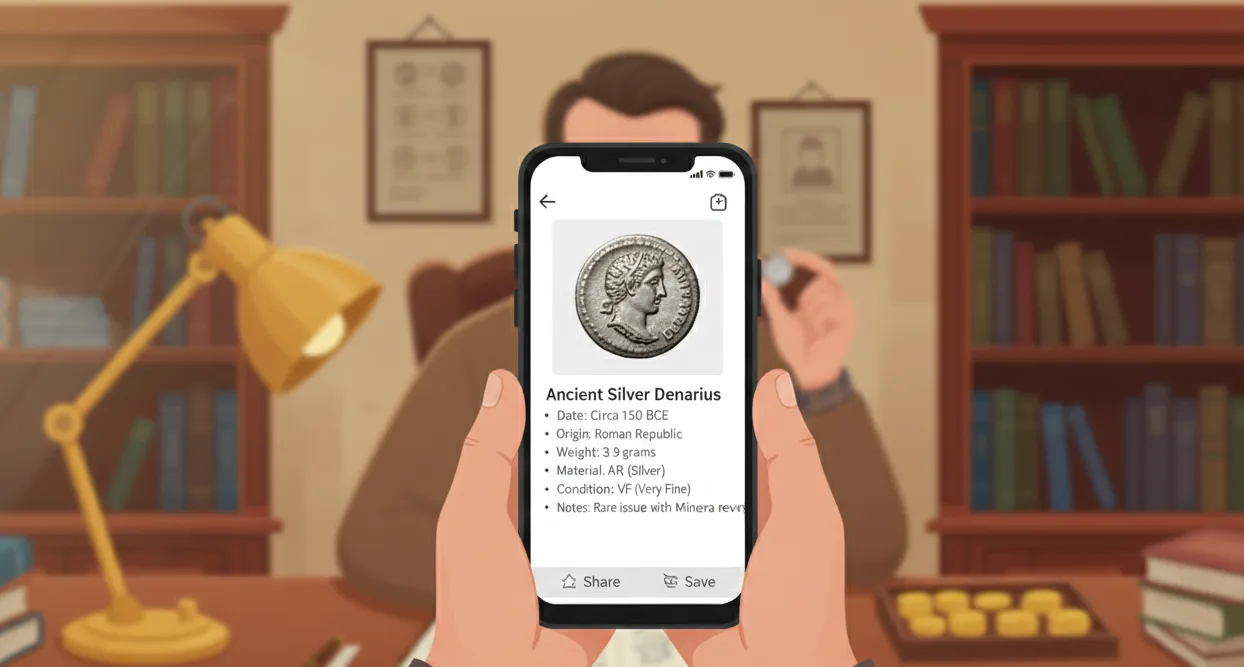
Coin ID Scanner App: Making Record-Keeping Fast
The Coin ID Scanner app stands as one example of a special tool that makes the work much faster, its main task being coin finding.
Find by photo, take a picture of the coin with your phone camera, and give the coin value app the image.
It can check your photo with a large fact list, finding the coin, and telling you what it is, and giving the basic facts.
Filling at once, the app itself puts the country, year, and face value into your record list, saving much time you would spend looking by hand.
Showing more facts, the app often shows an example price and a short history of the coin, adding value.
Needing you only to add, having the app put in the main facts, you only need to add your own notes: state, buying price, and keeping place, completing the record.
The Role of the Photo
The coin photo becomes a needed part of record-keeping, the photo being needed not just for looks, but for proof.
- Proof of state, the photo showing the coin’s state when the record was made. If a new spot shows up later, the photo will show it, giving a clear time-stamped view.
- Proof of ownership, helping to show the coin was yours if it gets lost, and showing its unique scratches, patina, proving your claim.
- Finding by sight, making it easier to find a coin by picture than by a long text list, giving a faster way to look.
For a good photo, you need to follow some simple rules of shooting:
- in good, soft light, staying away from direct light, and avoiding too much shine.
- the coin on a plain background, the background has to be one color, not taking the eye away from the coin.
- both sides, taking pictures of the obverse and the reverse of the coin, showing the full coin.
- close up, the coin needs to take up a big part of the picture, showing small details.
| Way of Keeping Records | Speed of Finding | Danger of Losing Facts | Can Sort Facts |
| Paper Book | Slow | High | No |
| Excel Program / Tables | High | Low | Yes (by year, country, price) |
| Coin ID Scanner | Highest | Low | Yes (by fact list) |
Record-keeping must be simple and done all the time, making it a habit.
Putting in facts at once, putting the coin into the list right when you buy or get it. Do not wait to avoid forgetting things.
Checking the coin identifier app notes once a year, setting aside time to check if the facts in the list match what you have in the album, and keeping things right.
Using the same names, using MS-60 for the state name, not using “almost perfect” for another coin later. The names must be the same, keeping the record steady.
Linking to the album, every coin in the list needs to have the exact place where it is kept, allowing you to find it without trouble.
Collection record-keeping is not just writing things down; it stands as the safety for your collection and the money you put into it.
You can start with a simple Excel file, making all the needed columns yourself.
Then, saving time and making things more exact, you can use special apps, such as Coin ID Scanner, which have the power to find the coin from a photo.
The most needed thing is always making copies of your facts, keeping the news about your collection safe all the time.